
Believe it or not, having coffee that is ‘too fresh’ is a real thing. Many roasters recommend a resting period that consumers wait for before opening and brewing their fresh coffee beans. But what does this actually do to the coffee beans and why does it have such an impact on flavour?
Words by Katie Burnett
Degassing and it’s effects
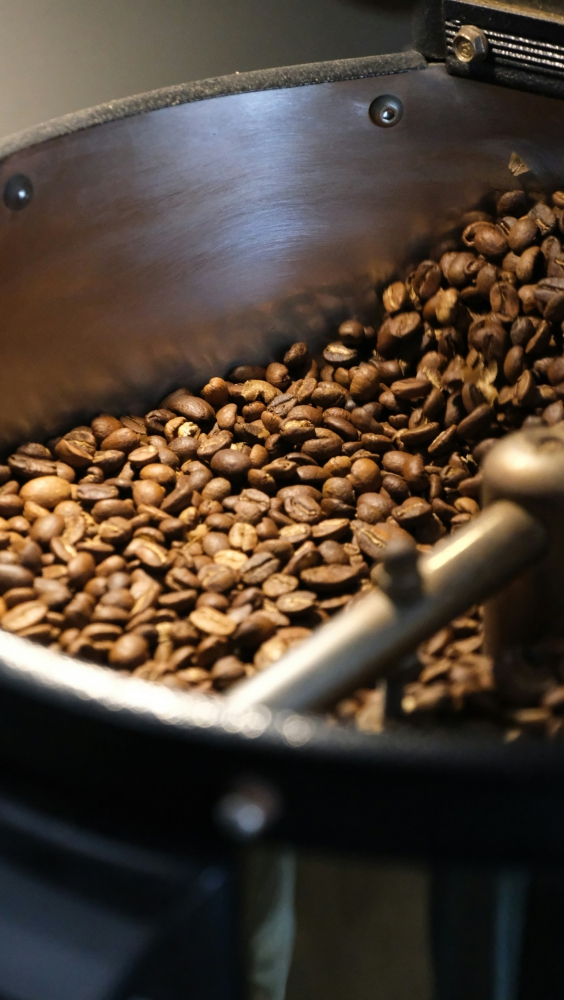
During the roasting process, there are many structural changes that occur in the coffee beans. Coffee loses 12%-14% of its weight during roasting, depending on initial moisture content, roast degree, and inner bean development (2014, Scott Rao, The Coffee Roaster’s Companion). If you have ever spent time around a coffee roaster, you’ll be familiar with the cracking sound that beans make after a certain amount of time in the roaster. “The structure of green coffee is relatively organized and dense”, outlines Rao. "Once you add heat, steam and carbon dioxide begin to build up within the structure of the bean, and the cell structure starts to break down as well as expand to accommodate the pressure. Once the pressure of these gases is too great for the cell structure to hold, it violently pops, creating that “cracking” sound, as well as expelling the silvery skin between the folds of the bean, known as chaff. It is at this point of the roast that specialty roasters will often drop their coffee out of the roaster, this is known as “first crack”. Those who are after a darker roast will continue to roast the coffee, often until what is known as “second crack”. The longer the beans stay in the roaster, the more brittle and fragile they become. Losing more gas and drawing oil out to the surface as it progresses further along the roast. “Almost all roasters would regard this as an objective indicator of a dark roast”. This is important to understand when trying to understand the effects of resting coffee.
Effect of roast degree
Lighter roast coffee will have more of these gases in its cell structure after roasting than dark roasts, because the cell structure remained more intact and contained more of its gases. Over time, the roasted coffee will release these gases, or degas. Lighter roast, denser coffee requires more time than dark roast, because more of the gas is present in the beans.
Carbon dioxide has a sharp, acidic and sour taste, and these flavours can be tasted in coffee that is very fresh. Each coffee roaster will recommend a different rest period depending on their roast style (light, medium or dark) and the density of the beans (geisha, for example, is extremely dense and would require an extended rest period to thoroughly degas). Allowing coffee to rest for 10 days after roasting is usually a good starting point!
April Coffee in Copenhagen suggest on their website “let your beans rest for at least 14 days before brewing. This is what we use in our stores and roastery, it offers a way better flavor clarity and balance in the cup.” April roast light, and this period tends towards a more extended period of rest.
How long do I wait to brew my coffee?
La Cabra, a specialty coffee company based in Denmark, who roast their coffee light recommend the following: “when brewing coffees less than 3 weeks from roast, we often use a lower brewing water temperature, and reduce contact time. This gentler mode of brewing reduces the harsher character that can often result from brewing coffee too close to roasting.
At the other end of the scale, when brewing very well rested coffees, more than 6 weeks from roast, we find that we can push the extraction further than expected, without any trace of these harsh or astringent flavours. We can use a higher water temperature, and split the brew into more pours in order to increase contact time, resulting in a rich and sweet cup, while still holding on to a high level of flavour and aroma clarity.” (La Cabra)
However, when brewing darker roasts, industry expert and author, Scott Rao recommends if he were to brew a darker roast, "I would not rest the coffee for more than a day, as the coffee will likely taste a little rancid within a few days,” (Scott Rao Blog, 2023) due to the oils that a darker roast extracts.
Is it different for filter and espresso?
Filter and espresso differ in that one applies pressure to the coffee and one does not. When brewing espresso, you are applying around 9 bar of pressure to your ground coffee in a sealed space (your porter filter), thus trapping the carbon dioxide. “There is nowhere for the gas to escape, whereas in filter brewing, gas released when water wets the grounds escapes into the atmosphere, and does not provide meaningful back pressure” (Scott Rao Blog, 2023).
This typically means that you could brew filter coffee earlier and espresso requires more rest. However, there is an increasing trend towards resting filter coffee for as long as espresso coffees to achieve greater sweetness and minimise sharp acidity.
Is there a correct way to store coffee?
Roasted coffee is sensitive to oxygen, light and temperature. Coffee will age slowly in a sealed container in the freezer and age quickly in an unsealed container exposed to light and heat.
This can be used to your advantage! If you’ve bought a bag of coffee that you’d like to drink within the next few days, some exposure to oxygen (ie leaving the bag open) could help the degassing process occur quicker. Alternatively, if you’re overstocked or have bought a special coffee that you’d like to last a long time, keep it sealed and put it in your freezer.
RESTING ROASTS: IS FRESHER BETTER?
Scott Rao, May 29 2023