
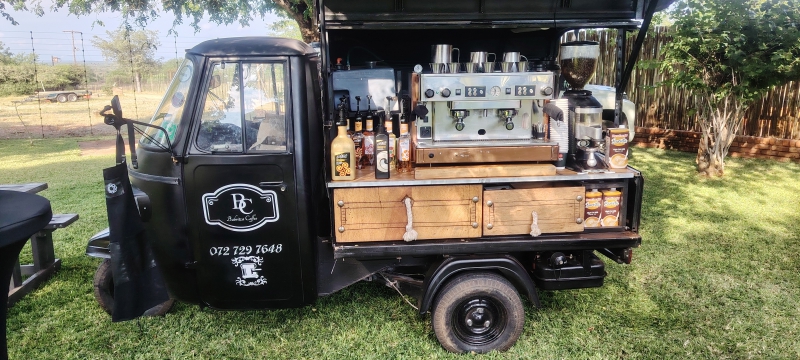
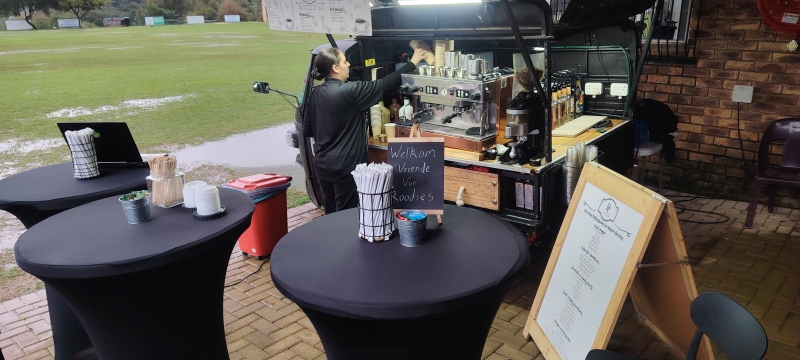
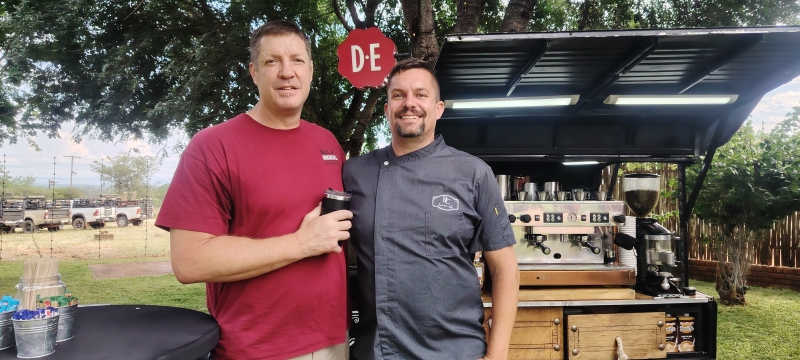
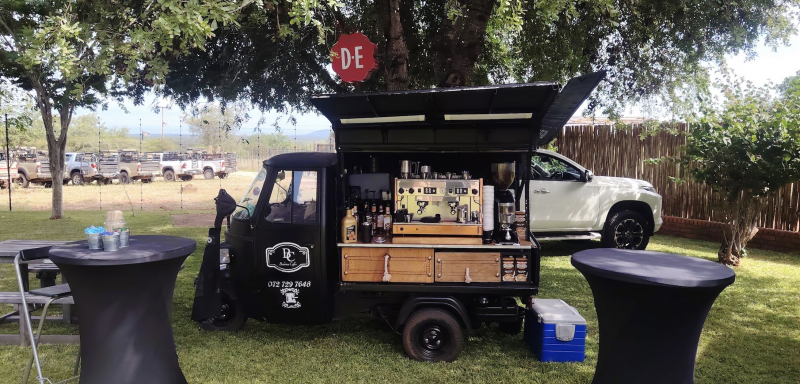
The coffee industry is full of wonderful characters and there are so many wonderful ways you can become part of a community. Wynand and Dot have cultivated one such community in Roodepoort, Gauteng taking their Piaggio tuktuk wherever there is a need for good coffee.
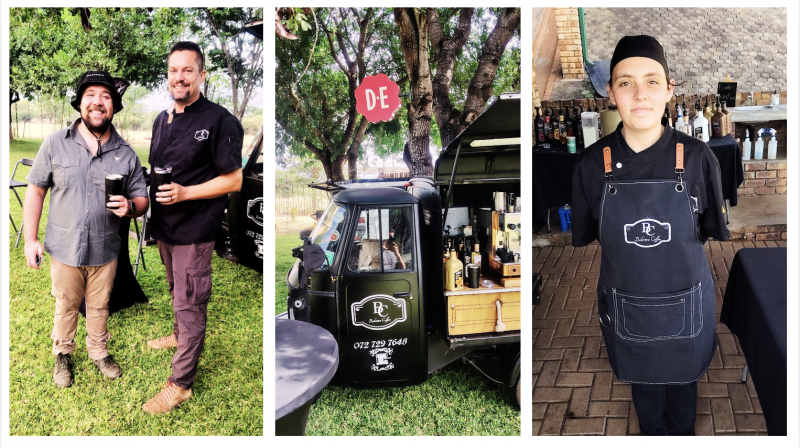
How did you get started in coffee?
It's been a journey for as long as I can remember.
At home, my parents had a small square hand grinder that fascinated me, and I remember my mother roasting coffee beans once. I ground them myself and tried to use them as instant coffee — it was terrible! But it only grew my fascination. In my first year as a student in Jeffreys Bay, there was a coffee shop called Santa Fe (if I recall correctly) that offered 40-odd flavours. I made it my mission to try every one of them. Their passion stayed with me, and while working in the travel industry, I had the opportunity to visit coffee houses all over the world, especially in Kenya. Watching people enjoy coffee is incredibly addictive. The barista becomes like family, knows every customer's name, and is genuinely passionate about what they do. That's what made me realise this was something I really wanted to do.
We started with the Piaggio in 2024.
What does the name BaBritza stand for, or where did it come from?
The name came from my wife and daughter, who was 12 at the time. She said that "Britz", our surname, is already so much a part of coffee that we're all basically baristas by default. BaBritza is simply a play on words that combines our surname with coffee culture.
Who makes up the BaBritza team and what are their roles?
There are two owners — myself and my wife. I look after operations and double as a barista whenever time allows. I believe that for something to work, you need to be hands-on, and getting to do what you're passionate about never really feels like work.
My wife, Dot, keeps the administration in check, assists at major events, and makes sure our operations run smoothly. Our manager and head barista is Mia, one of those people who is always willing to learn. She has evolved tremendously over the past few months, and I genuinely believe she can build a successful career in the coffee industry. Eric is our other barista. He is still a student and helps out during peak times and larger events.
What is your coffee community like in Roodepoort, where you operate?
The coffee community in Roodepoort is a wonderful mix of people. There are the regulars who love our Cortado. I often recognise them from a distance and make sure their coffee is ready by the time they reach us. Then there is the younger generation, eager to try every flavour imaginable on the menu. That's what is so amazing about coffee. You can cater to almost any preference, and wherever people are enjoying their cup, it's usually accompanied by conversation, connection, and a shared moment.
Do you roast your own coffee, or do you get it from a roaster partner — who roasts the beans?
Let me take it one step further back: some of my beans come from my own garden — well, a few kilograms a year at least! In the middle of Gauteng, I have a few coffee trees, and special guests are often treated to a tasting in my office when they visit.
I've experimented with roasting over the years, but for the business we work with two suppliers. Our primary bean comes from TriBeCa, and we also use Douwe Egberts, with whom we've built a great relationship over the years. Personally, I've tasted and tested many coffees, but consistency is everything when serving customers, and TriBeCa consistently delivers exactly what I need. As soon as my own harvest is large enough, that might change a little.
What is your favourite part about running a coffee business?
The interaction with customers.
We have a flavoured latte that we nicknamed "Hakuna Matata" because the first person who tasted it said, "This tastes like all your troubles disappear for a while." For me, that's the essence of what every cup of coffee should be. Seeing someone genuinely enjoy and appreciate their drink is incredibly rewarding. Then there are the friendships I've built and the customers who drive past the big-name coffee shops just to support us. I even had a customer walk up to me at a festival recently, insist that I taste a competitor's coffee, and then scold me for not being there because now she had to drink that instead. To me, that was one of the greatest compliments I've ever received. It reminded me exactly why good coffee matters.