
Rassie van der Dussen is a household name in South Africa, having played Test, ODI and T20 cricket for the Proteas over the course of 6 years and earning himself 146 international caps across all formats.
The right handed batsman turned entrepreneur has always had a deep love for coffee and now is part of the team that founded Abantu Coffee! Coffee Magazine caught up with Rassie for a feature in the latest issue of the magazine (on sale now!)
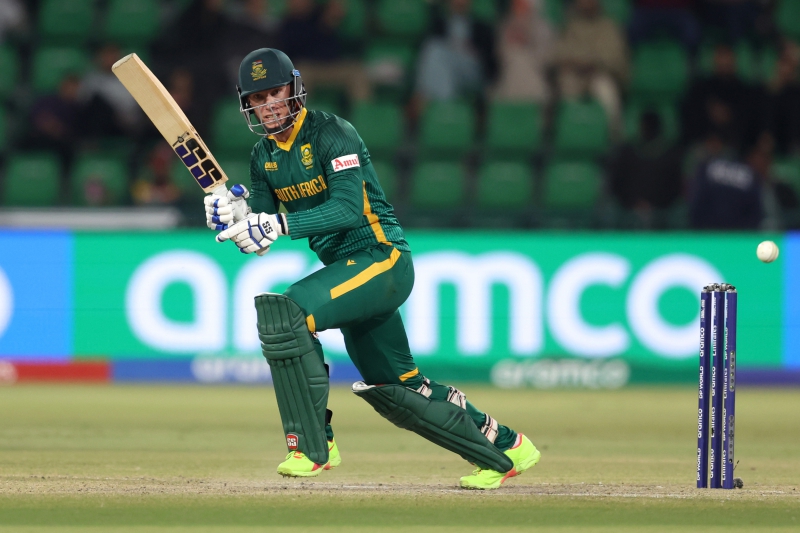
Rassie on the charge for South Africa!
As a professional cricketer, what role did coffee play in your day-to-day life?
To be honest, coffee has always been a massive part of my routine, long before we even poured our first cup at Abantu. As a professional sportsman, your life is dictated by travel schedules, intense training, and high-pressure situations. Coffee was that one constant, grounding ritual that brought a bit of normality to a very fast-paced life.
Back home, it was the cornerstone of my day. My manager and business partner, Chris Cardoso, and I used to meet up almost every single morning for a cappuccino, what we affectionately called our "capp test." We’d hash out absolutely everything over those coffees, from my cricket to our crazy business ideas. So, it was never really just about the caffeine kick; it was where we connected and did our best thinking.
Tell us a little bit about your touring memories and how coffee featured in that, if at all. Who were the coffee protagonists on tour?
Touring is an unbelievable privilege, but it can also become a bit of a bubble. You're often just moving from the hotel, to the team bus, to the stadium, and back again. Finding a good coffee shop was our main way of breaking out of that cycle. Whenever we hit a new city, the first mission on a rest day was hunting down the best local roaster. It got us out walking the streets and actually experiencing the place we were visiting.
You’d be surprised, but professional cricketers are massive coffee snobs. There was always a strong "coffee club" culture within the Proteas squad. Half the guys travel with their own AeroPress, portable hand grinders, and bags of specialty beans stuffed into their kit bags next to their batting pads.
Looking back, all that time spent in different shops around the world subconsciously fed into what we built. You start noticing what makes a place tick. It was rarely the fanciest shops we kept going back to; it was always the ones with the warmest baristas and an unpretentious, community-focused vibe.
What was your favourite beverage and where did you usually get it from during your playing days? Has it changed now?
A classic cappuccino was always my absolute go-to, and that hasn't changed. During my playing days, especially around the time of the hard lockdown, we had a small running club that would run to and from a little coffee shop in Faerie Glen, Pretoria. We spent a lot of time supporting local spots, and that specific shop is actually where we met who ended up being our very first barista.
The biggest change now isn't the drink, but the location. These days, it’s Abantu all the way. Since I live in Pretoria, I try to spend as much time as I can at all of our shops.
At what point did you see coffee as more than just a beverage to be enjoyed and see a possible business out of it?
The seed was planted way back in 2016 during one of those morning "capp tests." We were quite serious about a container coffee model, but our first pitch was rejected by a landlord who didn't understand the grab-and-go concept. Right at that time, my cricket career started accelerating, so we shelved the idea.
The real catalyst was the 2020 lockdown, and because neither of us were travelling, we finally had the time to plan our way forward. Interestingly, our initial idea was to create our own blend of beans and sell them to existing coffee shops. We put in weeks of effort, only to get rejected at the absolute last hurdle. Out of pure frustration, Chris and I just looked at each other and said, "Let's just open our own shop."
There was another massive driving force, though. During the pandemic, we saw how severely the hospitality industry was affecting baristas. Many were being exploited, working ridiculous hours for terrible pay. We realised we could create an unconventional model whilst providing a platform that actually cared for its staff. That’s why we chose the name "Abantu", which means "people". We knew that if we were going to make this work, the people had to be at the absolute centre of it.
Who were the people that influenced you, educated you and encouraged your coffee journey?
It genuinely takes a village. We went in knowing nothing about the industry, so we had to lean heavily on people who did.
It all starts with Chris. We learned the business side of things together through pure trial and error. When it came to actual coffee education, Francois Dreyer from Heavenly Coffees in Centurion was the man. We rocked up there two weeks before opening and asked for help. He sourced our commercial espresso machine, gave us crash courses, and installed everything.
Then there was Adriaan Coetzee, a contractor who randomly offered to build a front gate at my house one day when he walked past - we were living in the same street back then. I showed him some sketches on my phone of a container coffee shop, and he brought that vision to life single-handedly.
Finally, our first team of baristas: Alban, Kate, and Justin. Alban was artistic with a real feeling for coffee, Kate was our meticulous perfectionist, and Justin was the ultimate welcoming presence. Because Chris and I knew absolutely nothing, they were the ones who essentially created our menu, set our operating hours, and taught us what it takes to survive in a high-paced environment.
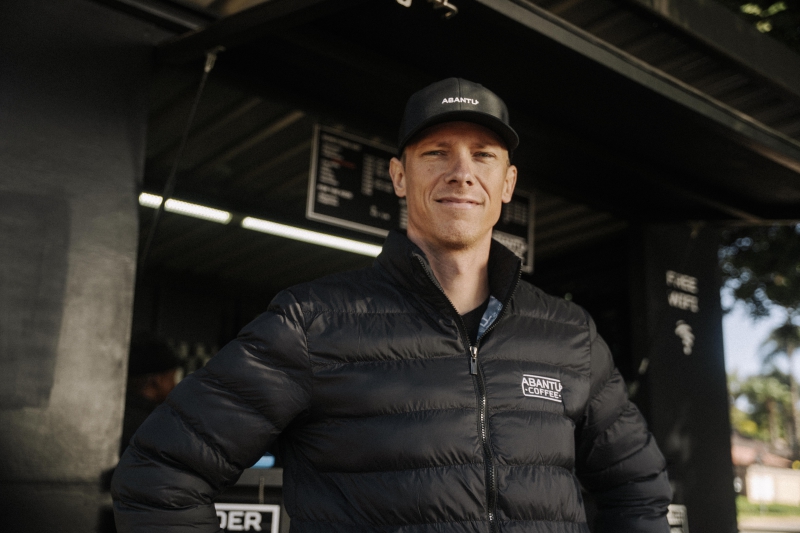
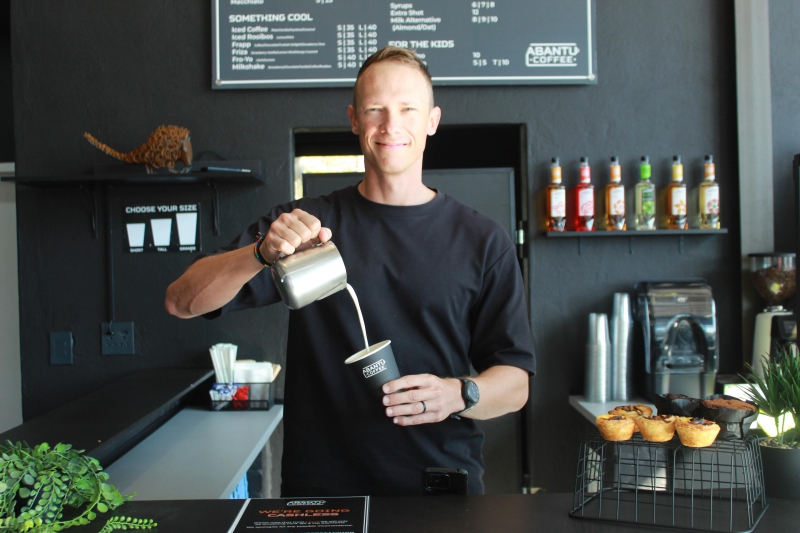 The no-look pour! Rassie is a founder of Abantu Coffee.
How did Abantu Coffee eventually come into being, and when was that in relation to the arc of your playing career?
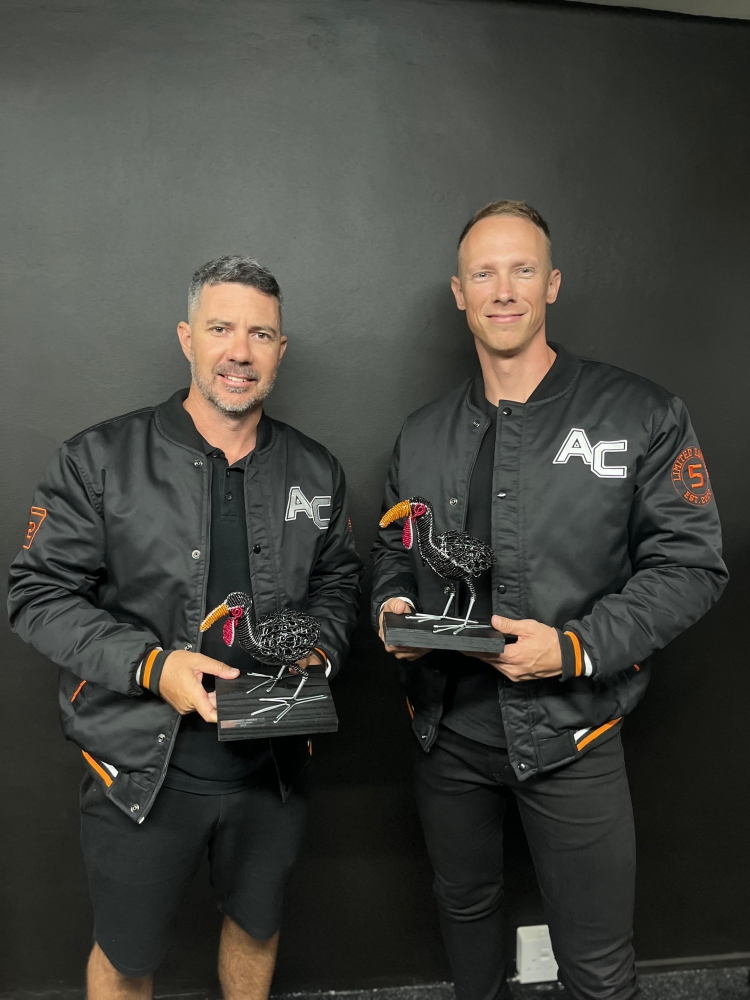
We officially opened our doors on 5 September 2020. Because I was right in the thick of my international career at the time, Chris and I made a very deliberate decision: we worked strictly behind the scenes for about a year.
I didn't want my public sporting persona getting in the way. I wanted completely objective feedback. If the community was going to love Abantu Coffee, it had to be because of the quality of the cup, not because they recognised the owner. In a lot of ways, building the business kept me incredibly grounded. The international cricket bubble is intense, but returning to Pretoria to put chairs out at 6:30 in the morning was a brilliant reality check.
How involved are you now, on the daily?
My day-to-day involvement looks very different now. We've scaled up significantly to around ten locations. Because of that footprint, I spend most of my time at our head office in Garsfontein, Pretoria, and try to visit most of the shops on a weekly basis.
My role has naturally shifted toward the broader strategic side of the business and managing our property infrastructure, like expanding our creative spaces over at Abantu Studios. The only reason I can step back from the daily grind is because of our unbelievable management team who runs things brilliantly from head office, even when I am away touring the world.
What does the future hold for Rassie in cricket and in coffee respectively?
On the cricket front, things have naturally shifted since I called time on my international career back in March. Wearing the Proteas badge was an absolute privilege, but stepping away from that touring bubble was the right move. My focus is now entirely with the Lions. I’m really enjoying the opportunity to keep competing domestically and passing on some experience to the younger guys.
On the business side, we are moving rapidly. The immediate future is all about sustainable expansion. We are in the advanced stages of opening new locations throughout the country. We are also prioritising a fair franchising model, something that gives young entrepreneurs a genuine chance of success without squeezing them, whilst maintaining our core ethos of looking after our staff. We also have to navigate industry challenges, like the recent skyrocketing of green bean prices, without compromising on quality.
So, between staying padded up for the Lions and scaling Abantu organically, the future is incredibly full, but I wouldn't have it any other way.