
By Nicole Terra
My six-month residency in Franschhoek began with a search for hidden coffee gems. Paradoxically, my first stop has already been in the national spotlight as the winner of two 2025 Luxe Restaurant Awards: Coffee Shop of the Year and Pastry Chef of the Year. Prompted by a friend’s claim that it serves the finest coffee in the 'Hoek, I made the brief ten-minute walk to see if it lived up to the hype. What I discovered was an enchanting, time-capsule of a space that felt worlds away from the modern grid.
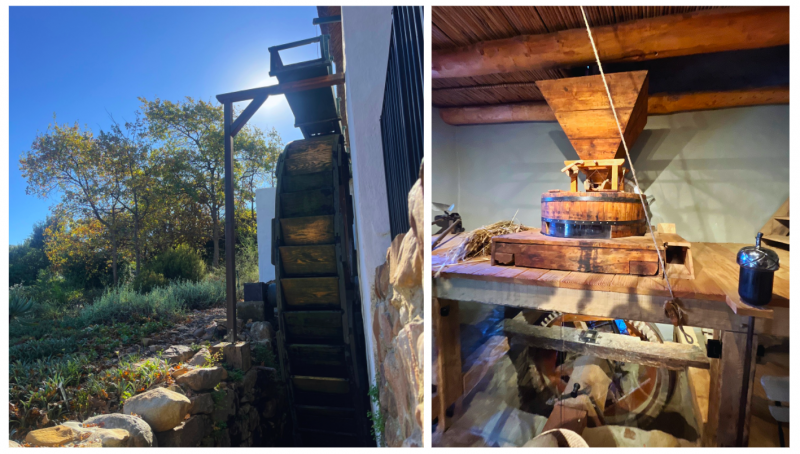
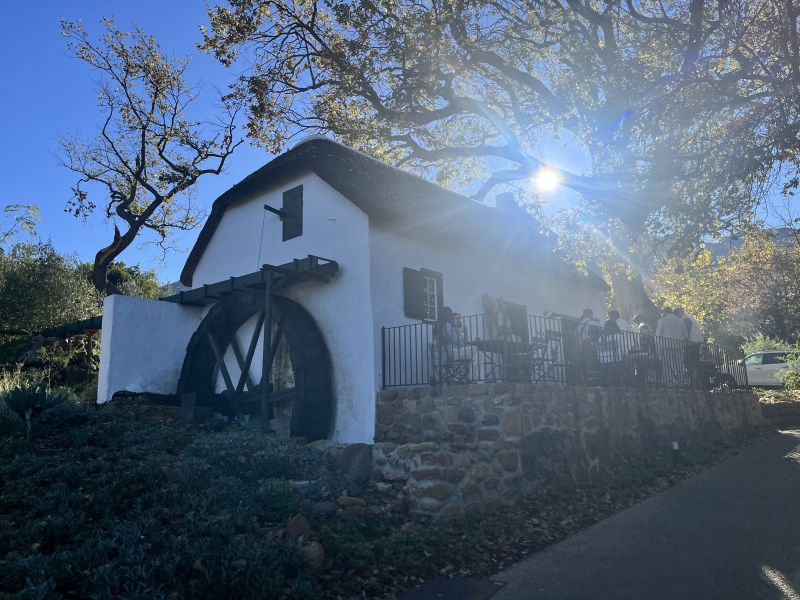
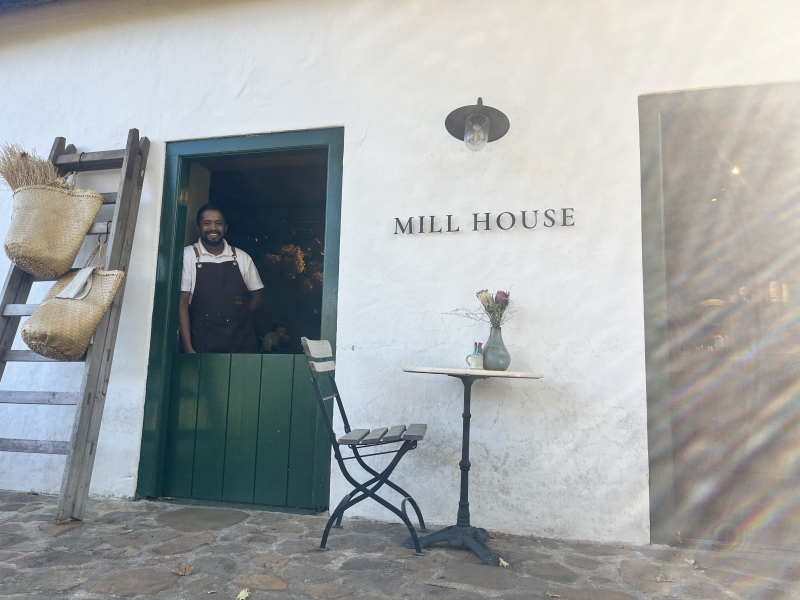
The Mill House Pattisserie is housed inside an authentically restored water mill, where massive historic stone walls and exposed wooden beams frame a few cozy tables. Greeted by an unassuming barista, my eyes immediately scanned the counter to check what was brewing—none other than a beloved local staple, Terbodore Coffee Roasters. This is where I met the head barista, Gavin. Entirely self-taught, he understands the "grind" better than most baristas I know. He explained it to me, "People think to make a good cup of coffee, you just put the grinder on. No, it's not working like that. Put the grinder on, grind your coffee. You as a barista must taste the first coffee before you serve it." That rigorous dedication to quality shows in every cup.
I order a flat white and a crispy croissant—as one does—before heading outside to claim a seat. The pastry display itself is a visual masterpiece, showcasing everything from delicate tarts to crusty sourdough, all baked on-site. You can instantly taste why Keshia won South Africa's top pastry award. The croissant features world-class lamination: insanely flaky on the outside, light and airy on the inside, and boasting that deep, complex flavour you only get from high-quality stoneground flour and traditional slow-fermented mother cultures.
The outdoor view of the Franschhoek mountains is absolutely stunning, but I quickly realise I have company. Up on the thatched roof, a local squirrel is waiting anxiously, practically measuring the distance to pounce on my beautifully crafted pastry. I chuckle to myself, keeping one hand over my plate to guard it with my life. Sitting here under the morning sun, dodging a furry thief, I realise there is truly no better place to be.
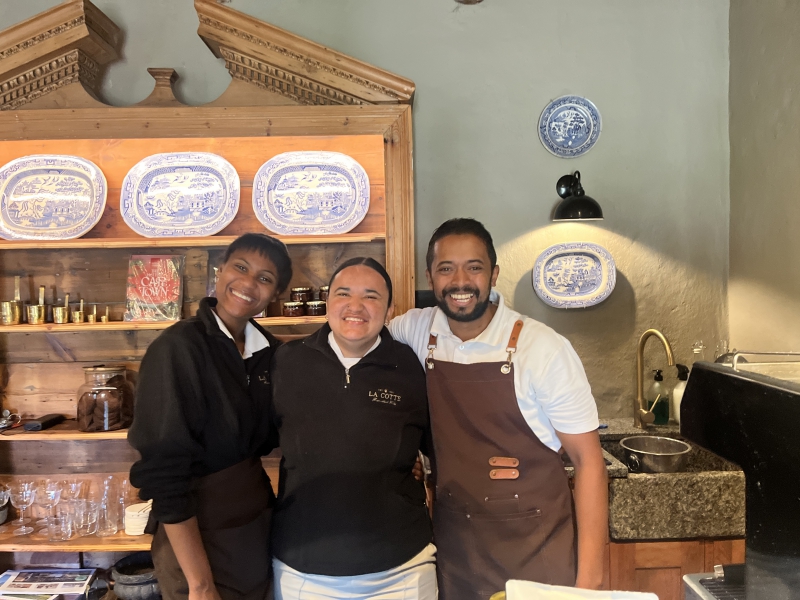
The experience comes full circle when I connect with the core team. I catch up with the celebrated pastry chef, Keisha, the baristas Cameron and Gavin and the estate’s manager, Mark Dendy Young. They treat me to a brief rundown on the deep-rooted history of the agricultural property and the evolution of their standout patisserie. It was previously derelict. It was just a wood store. It was obviously a mill, which is considered the oldest water mill in Africa. “1786 is the first mention of this mill.” says Mark, “It was mentioned in the estate of a woman. She was the single woman who ran this farm, who milled the wheat. She had a miller, but she was industrious, which was quite progressive if you think how women were in the 1800s”.
This history feels even more profound when you consider what this valley has recently endured. Franschhoek has been repeatedly battered by devastating, record-breaking floods that triggered massive mountain mudslides and caused the adjacent La Cotte River to violently burst its banks. With roads washed away and the agricultural landscape deeply scarred, stepping into this 18th-century mill house takes on a whole new meaning. It isn’t just an aesthetic step back in time; it is a testament to structural resilience. These ancient stone walls have literally weathered the storm, standing firm as a quiet sanctuary while the world around them shifted.
In striking contrast to the bustling main strip of Franschoek town, at La Cotte, they are actively preserving the raw history of the farm, making it feel like a genuine step back in time. That is precisely what makes this place so special: it feels like a well-kept secret that remains consistently spectacular. This preservation is the exact reason people visit the valley. We crave that authentic French Huguenot experience. The space feels entirely true to what would have been created had the original 18th-century landowners simply decided to open a little coffee shop on their porch.
As I watch the mountain shadows shift across the valley, a sudden wave of selfishness hits me. I find myself wishing I could erase these words, keep the old mill a secret, and guard this sanctuary solely for myself. Yet, true artistry demands to be shared, even if it means sacrificing my favourite new hiding spot.
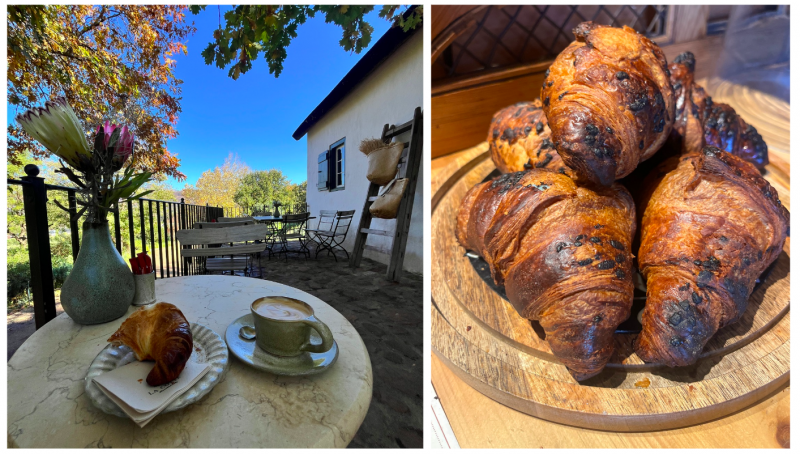
Bringing the cup to my lips, I finally taste the fruit of Gavin's meticulous labor. The flat white is spectacular—velvety, rich, and perfectly balanced, with the bold, chocolatey undertones of the Terbodore roast cutting smoothly through the micro-foam. It is a taste that honours both the centuries of history built into these stone walls and the tireless daily grind of the people who run it. Gavin was right: you have to taste it to believe it.