
Words by Lemuel Butler
Remember to support Lem's 10K for H.E.R happening in Ethiopia this week.
For our 50th Edition when we thought on our back catalogue of magazines, one of our favourite article series was the interwoven strands of music and coffee seamlessly integrated by the inimitable Lem Butler, Board Member of Grounds for Health, co-founder of Black&White Coffee Roasters and one of our first international guests at Creative Coffee Week 2018. We gave him carte blanche to blow our minds with what his current musings on music and coffee are, and he did not disappoint.
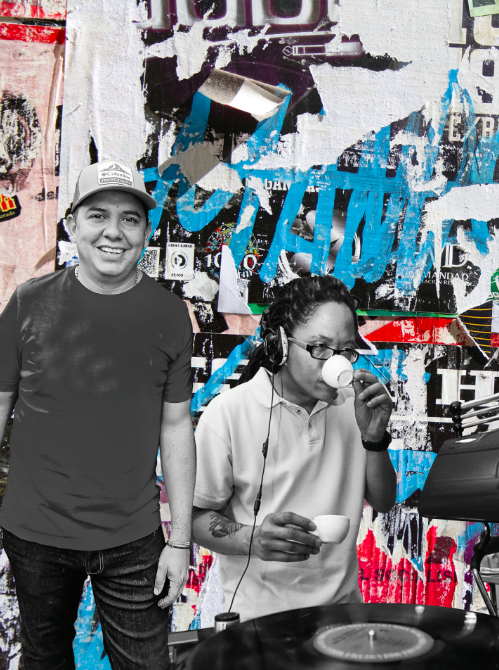
In the 50th Edition of Coffee Magazine we honour a monumental milestone in music history: 50 years of hip-hop. Just as hip-hop’s pioneers pushed boundaries, broke moulds, and redefined culture through sound, coffee farmers around the world have been leading a revolution of their own, innovating and adapting their methods to a rapidly changing world. Though seemingly worlds apart, hip-hop and coffee farming share striking parallels—both driven by relentless innovation and an uncompromising commitment to excellence. Today, we explore how the cutting-edge creativity of hip-hop producers echoes the ingenuity of coffee producers striving to create distinct flavours and combat climate change.
Sampling: A Masterstroke of Innovation in Hip-Hop Production
Since its inception in the Bronx in the early 1970s, hip-hop has been synonymous with innovation. Perhaps nothing symbolises this creativity more than the art of sampling. Legendary producers like DJ Premier, J Dilla, and The RZA turned the act of “sampling” into a high art form, breathing new life into existing recordings by reinterpreting them through a fresh lens. They took snippets of jazz, soul, funk, and blues and layered them into groundbreaking beats that transformed the music landscape.
One of the most iconic examples is A Tribe Called Quest sampling Lou Reed’s “Walk on the Wild Side” for their classic track “Can I Kick It?” Here, they didn’t just borrow from the past—they transformed it, making it their own. Kanye West, a modern-day sampling genius, famously repurposed Chaka Khan’s “Through the Fire” to create his soulful hit “Through the Wire,” once again proving that innovation often comes from embracing history and reshaping it for a new generation.
Anaerobic Processing and Co-Fermentation: Changing the coffee production game
Just as hip-hop producers revolutionized music with innovative use of equipment like drum machines and samplers, coffee farmers have embraced new technologies and methods to produce exceptional coffee despite environmental challenges. One such approach is anaerobic processing. Much like a producer manipulating soundscapes to create something new, coffee farmers can control fermentation environments to coax out complex flavours that traditional methods might not unlock.
Take Elkin Guzmán, a Colombian coffee producer known for his meticulous approach to fermentation. Guzmán uses fermentation tanks equipped with probes to monitor acid levels, ensuring precise control over the process. This method allows him to consistently produce award-winning coffees that stand out for both their complexity and balance. Guzmán’s innovative approach mirrors the exacting standards of a hip-hop producer like J Dilla, who would spend hours meticulously crafting beats with an MPC3000, tweaking each sound until it was just right.
Additionally, coffee producers are exploring co-fermentation—combining coffee cherries with other fruits or spices during fermentation—to create entirely new flavour profiles. This method is reminiscent of how hip-hop producers blend multiple samples and genres to create a unique sound. Just as Kendrick Lamar’s producer, Sounwave, masterfully fused jazz, funk, and hip-hop influences in To Pimp a Butterfly, coffee producers are fusing terroir, science, and innovation to produce something that transcends tradition.
Innovation in Equipment: Drum Machines and Fermentation Tanks
Hip-hop’s rise was driven by the technological innovation of drum machines like the Roland TR-808, which allowed producers to create beats with unprecedented depth and variation. The same spirit of ingenuity is found in the coffee world, where fermentation tanks, drying beds, and even climate-controlled drying systems are becoming essential tools for the modern coffee farmer.
Producers like Madlib have been known to incorporate analog equipment into their production process, using old school samplers and drum machines to create a raw, authentic sound. This mirrors how coffee farmers are embracing technological tools to refine their craft, but with an artisan’s touch. Fermentation tanks like those used by Guzmán, equipped with modern sensors and data-driven insights, allow for precision in processing coffee, just as modern music equipment allows for precision in crafting beats.
Combatting Climate Change: Shared Struggles, Shared Solutions
Both hip-hop and coffee farming have faced existential challenges that demand adaptation. For hip-hop, the rise of digital streaming transformed the music industry, forcing producers to adapt to new modes of distribution and audience engagement. For coffee farmers, the looming threat of climate change has altered traditional growing conditions, forcing them to find new ways to cultivate their crops and protect their livelihoods. In the face of climate change, innovative processing methods like anaerobic and co-fermentation not only enhance coffee’s flavour profile but also offer solutions to the increasing unpredictability of weather patterns. In many ways, it’s the same resilience shown by hip-hop producers in an era when digital platforms disrupted traditional music production. They both find a way to move forward.
Hip-Hop’s Legacy, Coffee’s Future
At its core, hip-hop has always been about transformation—taking something old and making it new, breaking rules to redefine culture, and inspiring future generations to push boundaries. Coffee farmers today are engaged in the same process. With every innovation in processing, every tweak in fermentation, they are rewriting the rules of coffee production, just as hip-hop producers rewrote the rules of music.
As we look back on 50 years of hip-hop’s influence, we also look forward to the future of coffee. The innovative spirit of figures like Elkin Guzmán reflects the same energy that drove legendary producers to create timeless beats. Whether it’s sampling a classic track or fermenting coffee in an unexpected way, the ethos remains the same—create something remarkable, something that leaves a lasting legacy.
In both music and coffee, innovation is what keeps the culture alive, evolving, and thriving for generations to come.
Epilogue: Anaerobic and co-ferment coffees aren’t for everyone, much like hip-hop isn’t to everyone’s taste. But if you’ve made it this far, I encourage you to explore one or two albums that shaped my DJ career while sipping your favourite coffee. Challenge yourself to approach both with an open mind—and maybe even try an anaerobic coffee that intrigues you. Enjoy the experience, both for the music and the unique flavours in your cup. Trust the process.
Choice #1: A standout album in the sample-heavy, innovative instrumental hip-hop realm is Donuts by J Dilla, released in 2006. This album has become legendary for its dense sampling, unique structure, and emotional impact. Created largely from his hospital bed, Donuts is a 31-track journey filled with chopped and looped samples from a wide range of genres, demonstrating a deeply creative approach to beat-making. The album’s fragmented, loop-heavy style and use of obscure samples influenced generations of producers and artists, especially in hip-hop and beat culture. Artists like Kanye West, Flying Lotus, and Madlib cite J Dilla’s work as groundbreaking, and it has left an enduring mark on the hip-hop and instrumental genres.
Choice #2: Another influential album in this category is DJ Shadow’s Endtroducing….. (1996), often credited as the first entirely sample-based album. Known for its moody, atmospheric beats and blending of genres, Endtroducing….. reshaped instrumental hip-hop and electronic music. DJ Shadow used an Akai MPC60 sampler to create the album, layering samples from diverse sources, including jazz, rock, and classical music. Endtroducing….. inspired a generation of producers to view sampling as a powerful, creative art form in its own right.
Both Donuts and Endtroducing….. have been celebrated for their innovative use of samples and their emotional resonance, setting new standards in instrumental hip-hop and influencing how producers approach beat-making and sample manipulation.
Peace 2x