
Last week we ran an online editorial on RTDS, (see the full story below) and this week we have been nin Cape Town and came across two really cool RTD products which are worthy of inclusion:
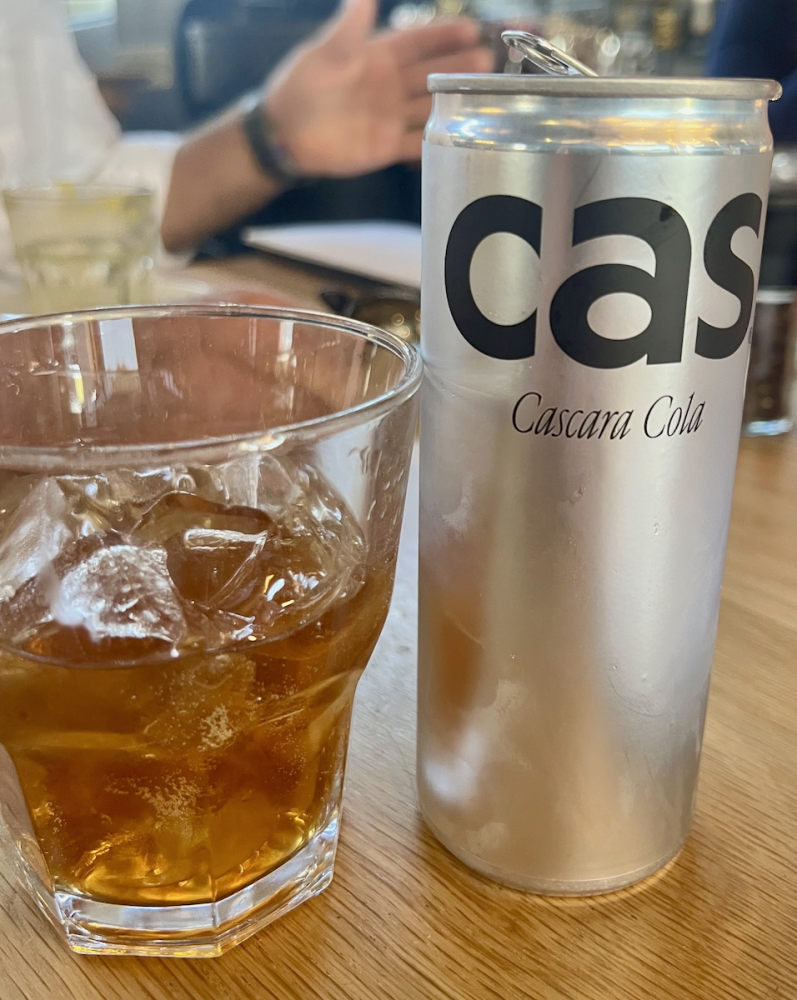
Cas - Cascara Cola:
We were really impressed by this refreshing cola - made from, and named after Cascara - which is the red pulpy fruit of the coffee cherry that protects the seed, and is usually discarded or turned into either mulch or sometimes used in cascara tea. It tastes a bit like a rock shandy without the bitters, and is surprisingly refreshing and delightfully tasty! We are especially happy to find it because it is a direct and useful purpose for the coffee cherry that we love and respect so much!
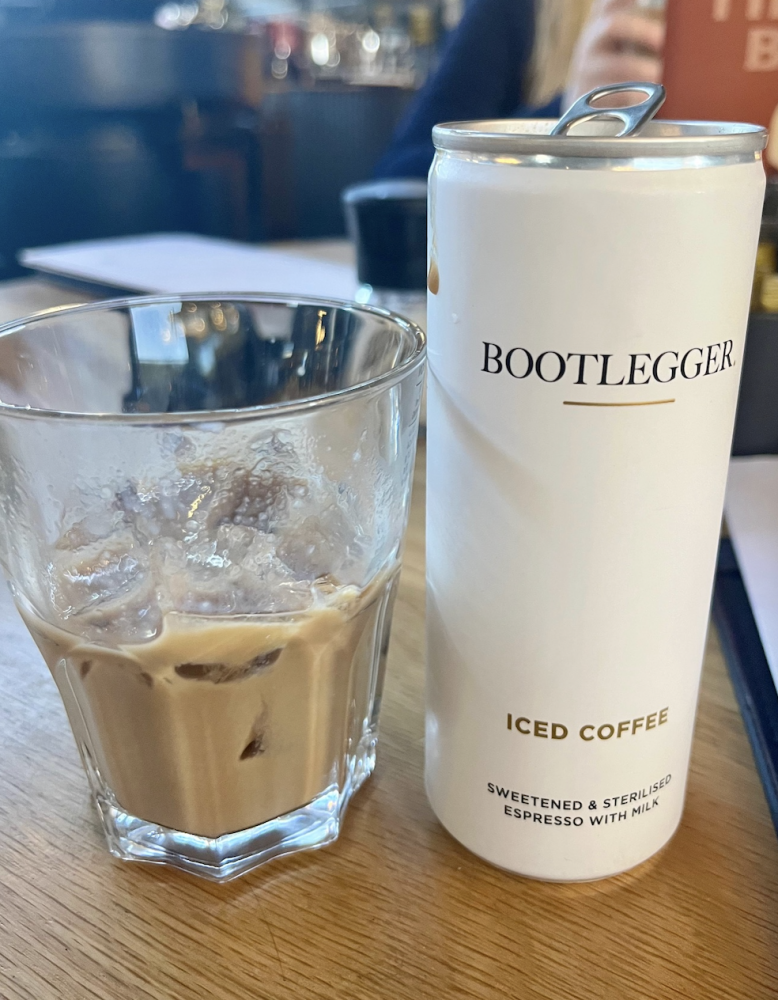
Bootlegger Iced Coffee:
We had the pleasure of visiting the Bootlegger HQ and trying out a bunch of their new drinks, (full article coming soon on this!) and we really enjoyed this iced coffee RTD option...not only is the presentation classy and clean, but so is the taste! Not too sweet, really great coffee flavour and perfect for a hot day when you want something cool and milky!
We take a look at the Coffee RTD market in South Africa - What’s out there, the demand (and who’s driving it) and how sustainable the market segment is.
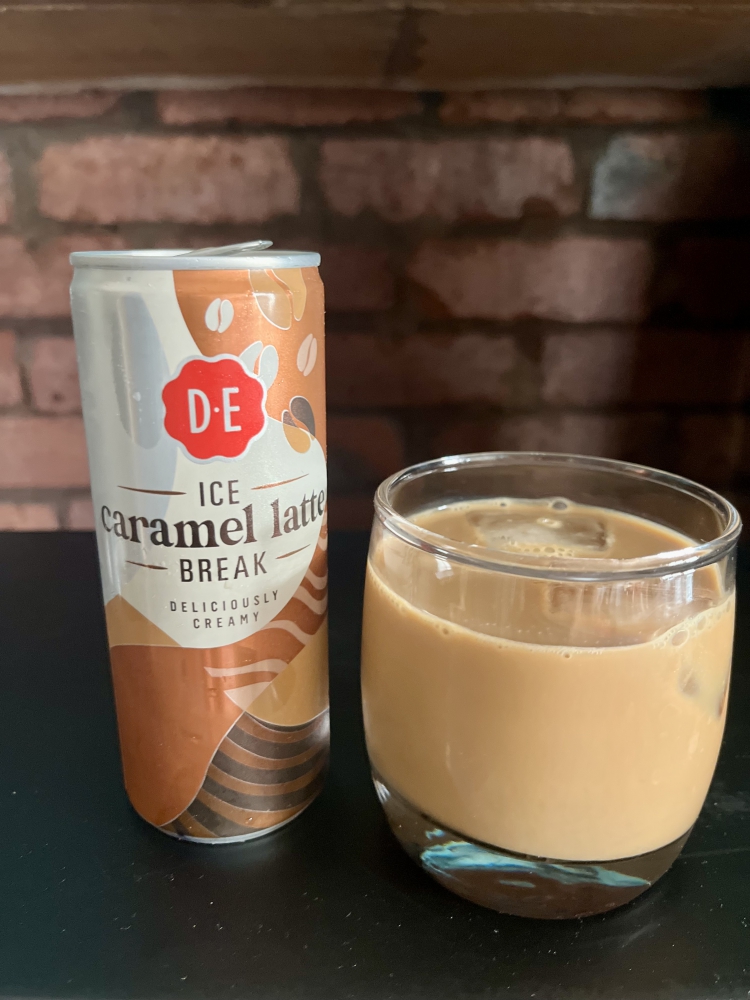
We get a lot of interesting coffee and coffee-adjacent things coming across our desk, and this week was no different. A package arrived and inside it, a selection of caramel themed confectionary and a caramel flavoured coffee in a can. So, we do what we always do…give it a taste, give an honest opinion and try to put it in context of our local coffee culture and where it fits (or doesn’t fit!)
South Africa’s ready-to-drink (RTD) coffee market is still relatively small, but it’s quietly gaining momentum. Traditionally dominated by sweet, dairy-based iced coffees in cans and bottles, the category is now starting to evolve. Alongside familiar cappuccino and mocha variants, we’re seeing the early emergence of cold brew and lower-sugar options that speak to a more health-conscious, premium-minded consumer.
Despite its growth, RTD coffee remains a niche segment locally. Compared to our country’s strong café culture—where freshly made barista coffee still reigns supreme—RTD plays more of a supporting role. Its core appeal lies in convenience: an “on-the-go” caffeine fix for busy urban professionals and younger consumers. In that sense, it competes less with cafés and more with energy drinks and iced teas. Think garage forecourt, grocery stores, grocery delivery platforms or convenience stores.
We went to an Engen Garage, a Spar, PnP's Dash app and a Woolworths to see what was on the shelves.
Engen:
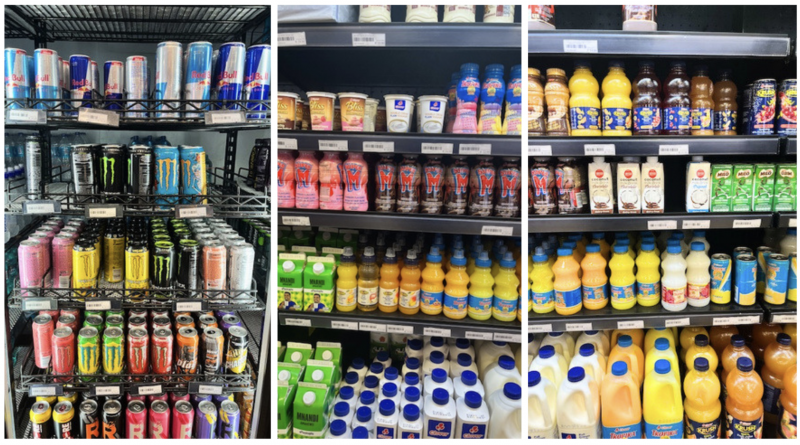
We started at Engen, which had a whole fridge for energy drinks (left) which is your caffeine and energy substitute for coffee, then (middle) the usual sweet milk based drinks (no coffee flavours) and (right) lots of iced teas, fruit variants and juice/milk variants. No iced coffees to speak of. Grab n Go - higher price points for the same goods in other stores.
Spar:
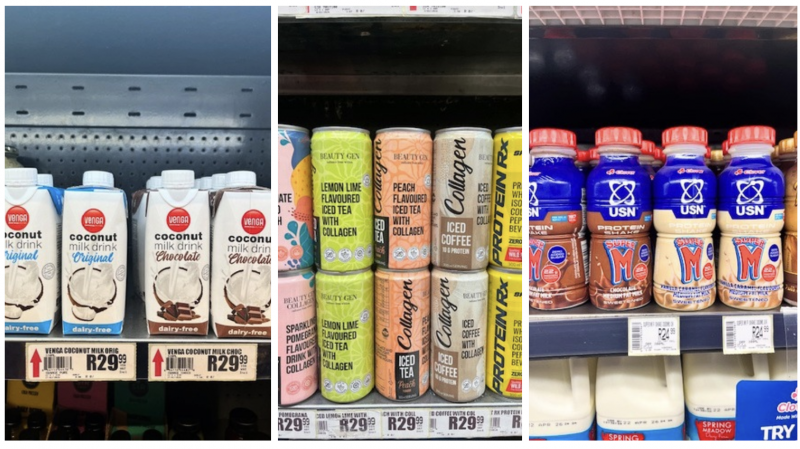
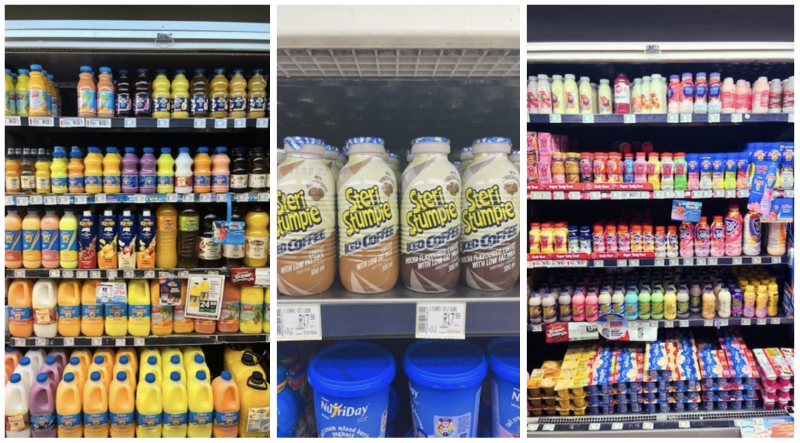 Spar was an interesting one because it had a much larger range and so it actually did have coffee flavoured milk drinks, but was largely the same products as Engen (above) with maybe a few more yoghurt based variants. BUT, the really interesting part was the "health section" (below) where substitutes for coffee (stimulant, energy, supplement substitute in RTD format) took the form of collaborations like Super M and USN, or coconut water or Collagen/Protein iced coffee or iced teas. Most reasonable in terms of price points.
Woolworths
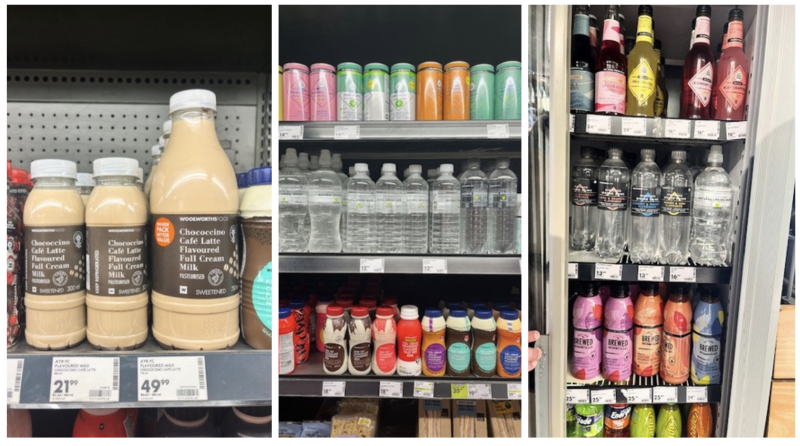
Woolies had more coffee specific beverages - (left and below) as well as a range of milk/yoghurt/fruit and iced tea variants as well as energy drinks, isotonic sports drinks, flavoured waters and kombucha etc The targeted coffee flavours was interesting! Price point was similar to Spar and PnP mostly, with a few higher priced, exclusive or WW white-labelled items.
.png)
PnP asap app:
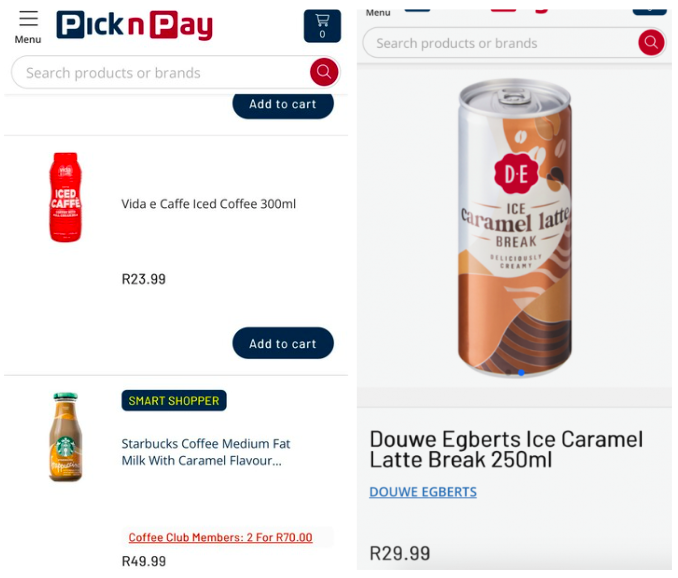
And finally, PnP asap. Which had a huge range, as does Checkers 60/sixty and all the others, but what really caught our attention in this segment is a) Quite a few local coffee targeted variants from reputable coffee outlets like vida and Starbucks and b) the price differentials!
Demand is growing steadily, but price remains a key barrier. RTD coffee is often positioned at a premium, limiting its reach in a price-sensitive market. That said, there is clear traction among Gen Z and urban consumers who are increasingly drawn to lifestyle beverages that combine convenience with perceived quality.
From a sustainability standpoint, the category sits in a mixed position. While commercial growth looks stable, environmental concerns around packaging and sugar content remain challenges. Encouragingly, global and local trends toward recyclable materials and cleaner labels are beginning to shape the space.
So what about our caramel can, sent in honour of Caramel Day? Honestly, it's not bad! Does it taste like coffee? No. Does it hit the spot on a hot summers day? If you like sweet and milky and you loved a Super Moo as a kid, then yes. Would I choose it over an energy drink/ Tropica/coffee flavoured milk? Probably yes. Would I pay upwards of R30 for it. Probably no.
Ultimately, RTD coffee in South Africa is not yet a mass-market staple—but it doesn’t need to be. Its future lies in carving out a distinct, premium niche that aligns with changing consumer habits and the growing demand for convenience without compromise. We've seen a few Specialty roasteries around the world attempt this, and we will certainly follow up with some insights after some thorough research!